There is a difference between developing a neighborhood and belonging to one.
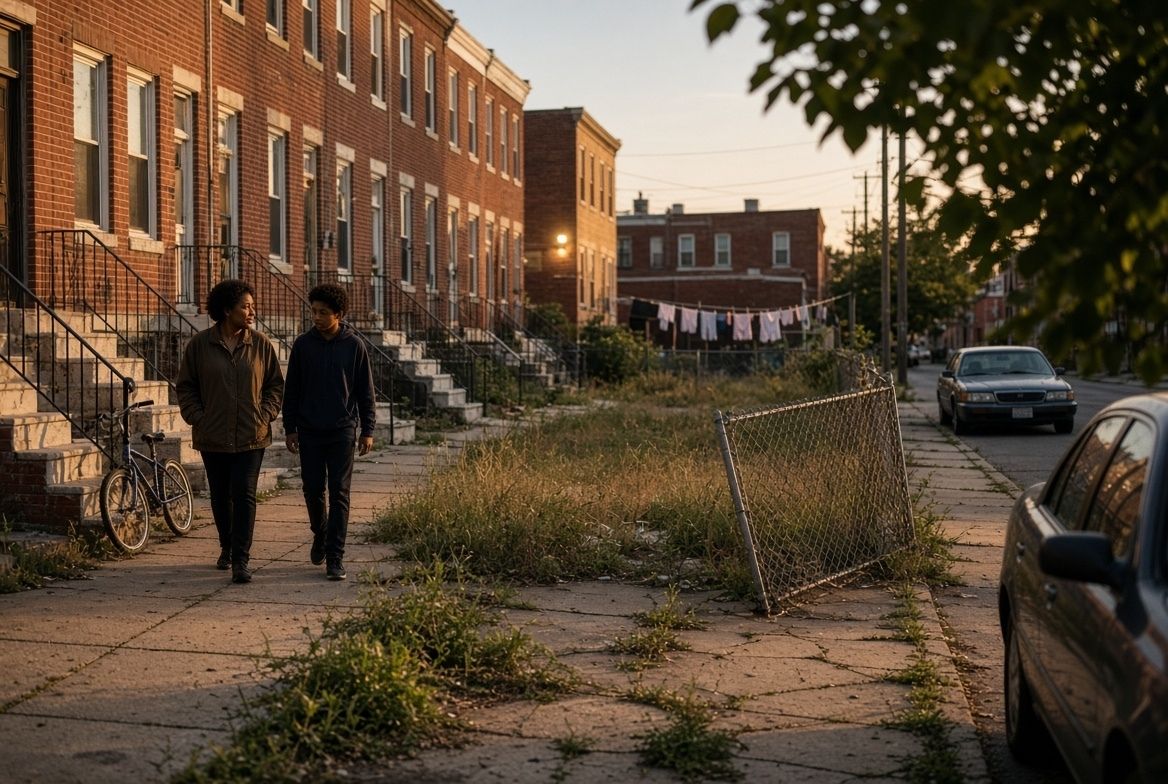
You can see it on a vacant lot. Grass grows through the cracks. People cut across it on the way to the bus. Kids treat it like leftover space because that is what the city taught them it is. After enough years, the lot stops looking like a problem and starts looking like the neighborhood’s personality.
Nicole Earle bought one of those lots on Park Heights Avenue.
She did not drive in from another zip code with a rendering and a ribbon. She lives there. She has said it plainly: the important part is not the title on the business card. The important part is that she walks the same sidewalks as the families this work is supposed to serve.
That changes the work.
A home is not only four walls
Dominion Community Development Corporation exists to turn low- and moderate-income neighborhoods into places that are healthy, stable, and — the word the organization actually uses — loveable.
Loveable is an unusual word for a development corporation. Most groups talk about units, AMI, and tax credits. Those things matter. Nicole has spent nearly three decades in that world: banking, underwriting, Low-Income Housing Tax Credit deals, bonds, New Markets. The projects she has developed or financed add up to more than a billion dollars.
None of that is the point of a loveable community.
A loveable community is a place you do not have to leave in order to be safe, fed, or proud of your kids. It is a place where revitalization does not mean the original residents get priced onto the next bus line.
That is why Dominion talks about development without displacement. It is easy to print. It is hard to practice. Practice looks like mixed-income buildings instead of a single product for a single income band. It looks like rental and homeownership on the same block. It looks like amenities that belong to the people already there, not amenities imported to attract someone else.
You can see the pattern in the work already on the ground: townhomes in Hillsdale in Anacostia, hundreds of homes and a park in Barclay, mixed-income housing in Uplands, affordable apartments in Johnston Square. Different streets. Same idea. People should be able to stay.
The next building should do more than house people
On Park Heights Avenue, the next chapter is Abe Dua Residences: affordable homes on a lot that sat empty long enough for the neighborhood to stop expecting anything.
The housing is the floor, not the ceiling.
The plan includes a recording and podcast studio. Not as decoration. As a classroom. Young people in Baltimore do not lack talent. They lack rooms where talent is treated like a trade — mixing, contracts, voice, discipline, a finished track instead of a rumor. A studio inside a residential project says something a rec-center flyer cannot say: your creativity belongs on this block, not somewhere you have to leave town to find.
There is a boxing gym in the same family of ideas, built around a simple rule: education first. Gloves come after homework. The point is not to produce fighters. The point is to give a teenager a reason to be somewhere at 4 p.m. that is not the corner.
West of there, on the West North Avenue corridor, Ubuntu Kitchen is meant to be a shared commercial kitchen and event space — a home base for food-truck vendors, new cooks, classes, and distribution. Food security is not only a pantry line. Sometimes it is a person who knows how to cook being given a legal kitchen and a shot at a customer.
Housing, music, food, mentorship. That is not four separate programs stapled together for a website. That is one theory of a block: if a young person can sleep somewhere decent, eat something decent, learn a skill, and be seen by an adult who is not afraid of them, the neighborhood has a better chance than any single grant can buy.
Why “I live here” is a development strategy
Outsider development often fails in the same quiet way. The building opens. The renderings were beautiful. Two years later the community room is locked, the ground-floor space is empty, and the people who testified at the hearing no longer qualify for the units.
A resident developer has a different accountability. She still has to pass this lot on the way home if the project stalls. She still hears the same sirens. She still shops where her neighbors shop. That does not make financing easier. Tax credits do not care who your block captain is. It does make the questions sharper.
Who is this for?
Who gets to stay when the street looks better?
What does a 16-year-old do after school in the building we just named after hope?
Park Heights has heard promises before. So has Anacostia. So has every neighborhood that spent a generation watching investment skip over it and then arrive all at once with a new name. The work now is slower and less glamorous than a groundbreaking photo. It is meetings at Park Heights Academy. It is partners who will still be there after the ribbon. It is treating financial literacy as seriously as a foundation, because a key without a plan for the mortgage is just another way to lose the house.
What we are actually asking of you
Dominion is a young nonprofit built on a long career. The site will get fuller. The board list will get names. The fundraising bars will move. None of that matters if the story stays abstract.
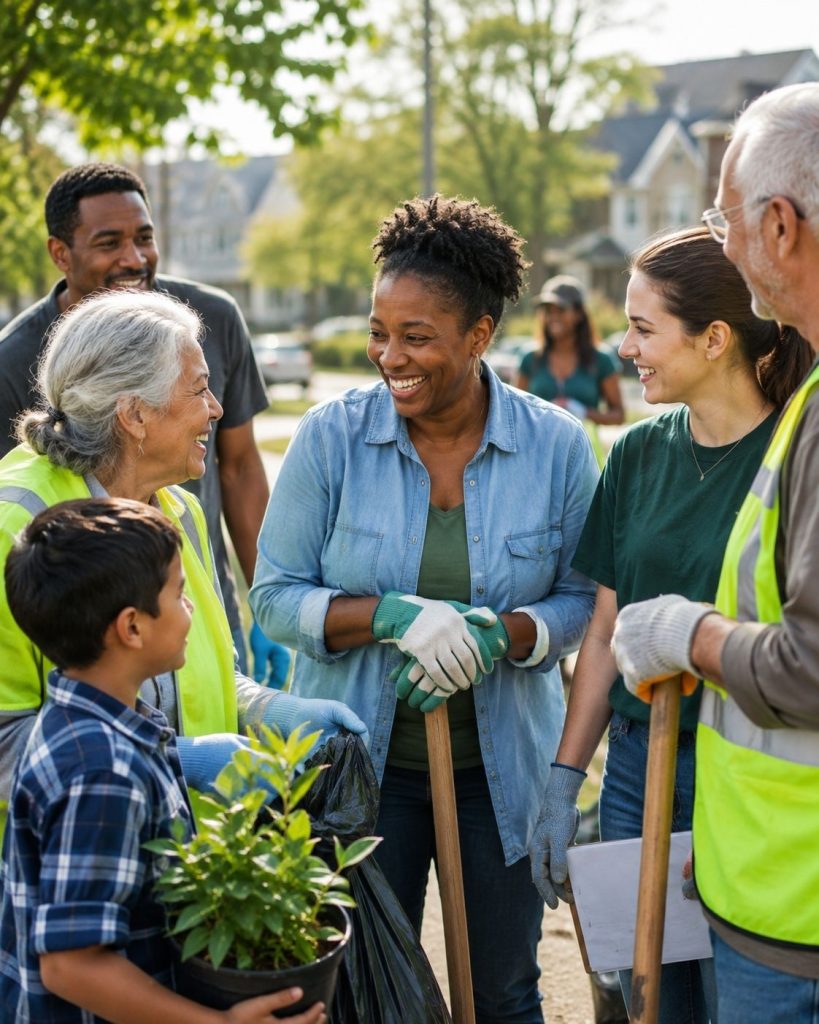
If you live in these neighborhoods, the invitation is not “support our mission.” It is closer than that. Come to the next project update. Tell us what the studio should teach. Tell us which food the kitchen should make room for. Volunteer if you can hold a clipboard, mentor a kid, or help a neighbor read a lease.
If you do not live here, the useful thing is not pity. It is partnership that does not require the neighborhood to perform its pain. Capital, introductions, skilled trades, and patience all count.
A vacant lot is a sentence the city left unfinished. Filling it with homes is necessary. Filling it with homes plus a place to record, a place to cook, and a place to grow up without disappearing — that is how a block becomes loveable.
Nicole Earle lives here. The test of this work is whether, ten years from now, the people who already lived here can say the same thing.